
- Home
- »
- Philippines
- »
- Southern Leyte
- Basel BSL
- Berlin BER
- Bremen BRE
- Dresden DRS
- Düsseldorf DUS
- Frankfurt FRA
- Hamburg HAM,
- Hannover HAJ
- Köln CGN
- Leipzig LEJ
- München MUC
- Norddeutschland HAM,HAJ,BRE
- Nürnberg NUE
- Ostdeutschland LEJ,DRS,BER
- Schweiz ZRH,BSLGVA
- Stuttgart STR
- Süddeutschland MUC,NUE,STR
- Westdeutschland DUS,CGN,FRA
- Wien VIE
- Zürich ZRH
- Österreich VIE,
- All board types
- Room only OV
- At least breakfast F
- At least half board HP
- At least full board VP
- At least all inclusive AI
- All inclusive plus AI+
- All board types
- Room only OV
- At least breakfast F
- At least half board HP
- At least full board VP
- At least all inclusive AI
- All inclusive plus AI+
Southern Leyte
Geographically, Leyte belongs to the centrally located Visayas group. The island measures about 180 km from north to south and has a maximum width of 65 km. Surrounded by the Leyte Gulf and the Philippine Sea, the island is a paradise for divers. Leyte has a total area of 7,368 km², making it the eighth-largest island of the Philippines. About 1.5 million people of various ethnic groups live on the island.
Politically, the island is divided into two provinces: Leyte (province) and Southern Leyte. The island of Panaon belongs to Southern Leyte. The most important cities on Leyte are Tacloban City on the east coast, the capital and economic centre of the island. On the west coast are the cities of Ormoc City, Baybay City and, in the south-west, Maasin City. The San Juanico Bridge, built in 1975 and 2.16 km long, connects Leyte with the neighbouring island of Samar. It is the longest bridge in the country and is considered an architectural masterpiece. Today Leyte is also characterised by its geothermal power plants near the city of Ormoc.

Diving
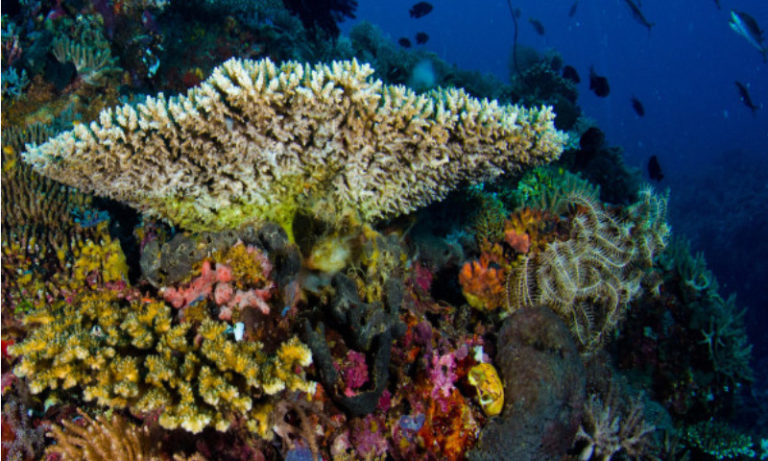
The province of Southern Leyte in particular is still quite a blank spot on the “diver's map”. There are numerous areas that have hardly been dived, far from mass tourism. A highlight is certainly the whale sharks, which can be seen with a bit of luck from January to May. A special dive site is the Sunok Sanctuary, where whale sharks can be seen on organised trips accompanied by rangers. Otherwise, the species diversity and the fantastic hard coral gardens offer an unforgettable natural spectacle. In addition, the occurrence of smaller species is pleasingly large: frogfish (anglerfish), nudibranchs (sea slugs), ghost pipefish, mandarinfish and countless other coral fish species. Turtles can also be seen on almost every dive, and sea snakes are not uncommon either. In the sanctuaries in the waters of Southern Leyte, encounters with barracudas, eagle rays, jacks and sometimes even mantas are also possible.
Getting there
Leyte can be reached by land, water or air. From the international airports of Manila or Cebu, flights with Philippine Airlines (PAL) or Cebu Pacific Air to Tacloban City or Ormoc (approx. 80 minutes) can be booked. There are also fast and regular ferries from Cebu to Leyte. Depending on the ferry schedule, an overnight stay in Cebu must be planned.
